 (424) 373-8211
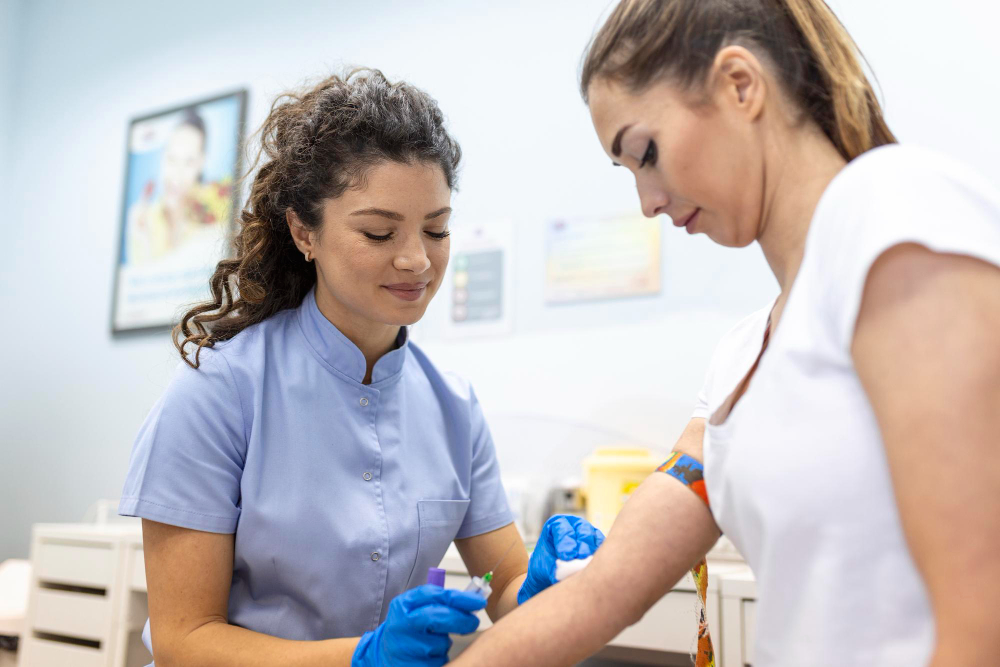
If you’re thinking about becoming a phlebotomist, you’re probably wondering what the training actually looks like. How long does it take? How much does it cost? And what kind of jobs can it lead to once you’re certified?
This guide walks you through the key details you should understand before enrolling. It draws on the experiences of students in our Phlebotomy Technician Training at Montes HealthCare College in Gardena, so you can expect practical and actionable insights.
Key Takeaways
- You can move from enrolling in an approved phlebotomy program to working in the field in just a few months.
- At Montes HealthCare College, training combines classroom instruction with a supervised clinical externship, so our students graduate with real venipuncture experience.
- A phlebotomy certification can lead to roles in hospitals, diagnostic labs, outpatient clinics, blood donation centers, and physician offices.
- Phlebotomy is a great option for people who want to enter healthcare without spending years in school.
- You do not need a college degree to become a phlebotomist. However, in California, you must complete a state-approved training program and obtain the proper certification and license before working in the field.
Phlebotomy Career Path – A Quick Overview
Becoming a phlebotomist in California is a structured process, but it’s much faster than many other healthcare careers. Instead of spending years in school, most students move from their first class to working in the field within a matter of months.
From First Class to Phlebotomist in California
Here is what the process of becoming a phlebotomist in California looks like:
- You begin by enrolling in a state-approved phlebotomy program. During training, students learn the core knowledge and hands-on skills needed to safely collect blood samples.
- After completing classroom and lab training, students move into a supervised clinical externship. This step takes place in a real healthcare setting, where students perform a required number of venipunctures and skin punctures under professional supervision.
- Once training is complete, graduates receive a certificate that allows them to sit for a national certification exam, such as the one offered by the National Healthcareer Association.
- Graduates apply for the Certified Phlebotomy Technician I (CPT I) license through the California Department of Public Health. After approval, they are legally allowed to work as phlebotomists in the state.
Our Phlebotomy Technician Training combines classroom learning, hands-on labs, and externship experience so students are prepared for both certification and licensure.
Typical Timeline to Your First Phlebotomy Job
For many students, the entire process from first class to licensure can take just a few months. However, the exact timeline depends on several factors. Training schedules, externship placement timing, and how quickly you complete certification and licensing steps can all affect the process.
Here is a general overview of what the timeline typically looks like.
| Step | What You’re Doing | Approximate Time | Notes |
| Training program | Classroom instruction and lab training | Several weeks | Learn safety protocols, anatomy basics, and venipuncture techniques |
| Externship | Supervised clinical experience | ~40 hours | Complete required venipunctures and skin punctures |
| Certification exam | Sit for a national certification exam | 1-2 days | Demonstrates competency and supports licensing |
| State license | Apply for CPT I through the CA Department of Public Health | A few weeks | Once approved, you can work as a phlebotomist |
What Does a Phlebotomist Training Program Look Like?
Here’s what phlebotomy training looks like at Montes HealthCare College. We designed it to be fast but also effective, so you can become licensed and confident to step into the field as a Certified Phlebotomy Technician 1.
Here’s what that looks like.
1. Basic Phlebotomy Module
Here you’ll cover everything from basic anatomy (especially the circulatory system) to infection control, patient ID, and specimen handling.
You’ll learn how to:
- Prep the site.
- Choose the right needle.
- Follow the correct order of blood draw.
- Safely handle sharps and waste.
2. Advanced Phlebotomy Module
Here you’ll learn about topics like biohazards, anticoagulation theory, and how to spot errors before they mess with test results.
This module will also give you knowledge about:
- Risk management.
- Patient prep.
- Legal considerations.
- Professional ethics.
- Communication.
- Stress management.
3. Phlebotomy Externship
Your externship takes place in an approved clinical setting, where you’ll be supervised by experienced professionals. You’ll be expected to perform at least 50 venipunctures and 10 skin punctures.
This is where it all comes together. Everything you’ve learned, now done with real patients, in a real healthcare environment. It’s intense, but it’s what turns students into working professionals.
What is a Phlebotomist Certification Program?
After completing all three parts, you’ll receive a Certificate of Completion. This makes you eligible to take the certification exam through the National HealthCareer Association. Once you pass, you can apply for your license through the California Department of Public Health.
What Can You Do With a Phlebotomy Certification?
Once you’re licensed, you can work in a variety of healthcare environments where blood testing and specimen collection are essential parts of patient care.
Where Can a Phlebotomist Work?
- Hospital phlebotomist: The pace is often fast, and many graduates choose hospitals for the variety of experience they gain early in their careers.
- Outpatient lab phlebotomist: The workflow is usually steady and predictable, so it’s an ideal option for people who prefer a structured environment.
- Clinic or urgent care phlebotomist: The pace can vary throughout the day, and many graduates enjoy the opportunity to interact with returning patients.
- Blood donation center or mobile blood drive phlebotomist: Phlebotomists often work with healthy donors and may travel to mobile blood drives at schools, workplaces, or community events.
- Mobile or home health phlebotomist: This role is appealing for people who prefer a flexible schedule and more one-on-one patient interaction.
What Can a Phlebotomist Do?
The main role of phlebotomists is to draw blood from patients. However, the entire process involves a few more tasks that you need to do, such as:
- Verifying patient identities.
- Labeling specimens correctly.
- Keeping everything sterile and organized.
- Keep detailed records and work closely with lab staff.
- Help patients feel calm and comfortable during the process (especially when you run into a difficult stick).
Understand the benefits of this career path better – read our full breakdown of the four key benefits of becoming a phlebotomist.
What Are Phlebotomist Hours?
Work hours can vary depending on where you’re employed.
In hospitals, phlebotomists are often needed around the clock, so you might find yourself working early mornings, evenings, weekends, or even overnight shifts. That’s great if you are looking for shifts that can boost your pay.
In clinics or labs, the schedule is usually more structured. You’ll be there during regular weekday hours, with the occasional weekend. If you value routine and a predictable workweek, this setup might be a better fit.
How Your Career Can Grow Over Time?
Because phlebotomy provides hands-on experience with patients and medical procedures, it can serve as a practical foundation for a wide range of healthcare career paths.
| Role | Additional Training Needed | Typical Setting | How Phlebotomy Helps |
| Phlebotomist (CPT I) | Approved phlebotomy program + state license | Hospitals, labs, clinics | Entry-level role collecting blood specimens |
| Lead Phlebotomist | Experience + internal training | Hospital or diagnostic lab | Builds on proven skills and reliability |
| Medical Assistant | Medical assistant training program | Clinics, outpatient centers | Experience with patients and clinical procedures |
| Laboratory Technician | Two-year degree | Diagnostic laboratories | Familiarity with specimens and lab workflow |
| Nursing (LVN/RN) | Nursing program | Hospitals, clinics | Patient-care experience and clinical exposure |
Can You Become a Phlebotomist Online?
Not fully. In California, the Department of Public Health only allows the Advanced Phlebotomy module to be taught online. The other two modules (Basic Phlebotomy and the Externship) must be completed in person.
There is one exception. If you already have 1,040 hours of phlebotomy experience in a clinical setting, you may be eligible to only attend the advanced module before sitting for the certification exam.
But if you don’t have that experience, you’ll need to complete all three modules, and most of your training will be hands-on.
That’s why at Montes HealthCare College, we believe in-person learning is a better option. You’re not just watching how to do a venipuncture, you’re doing it. You’re getting immediate feedback, building confidence, and learning to stay calm under pressure.
How Much Does a Phlebotomist Make?
Median phlebotomist salary is $43,660 per year according to the U.S. Bureau of Labor Statistics.
National Median vs California
Phlebotomists’ salaries in California are much higher than the national average, around 15% according to Indeed. That’s one more reason why this career path is a great option.
What Affects Your Pay Over Time
Keep in mind that hospitals and diagnostic labs usually tend to pay more than smaller clinics or doctors’ offices.
In addition to that, several factors can influence how much a phlebotomist earns as their career progresses:
- Years of experience: As you gain experience performing venipunctures, handling specimens, and working with patients, your skills become more valuable to employers.
- Shift availability: Evening, overnight, weekend, and holiday shifts may come with additional pay or shift differentials.
- Leadership roles: Experienced phlebotomists may advance into positions such as lead phlebotomist or supervisor, which can include additional responsibilities and higher compensation.
- Additional credentials: Expanding your skills with related training, such as medical assisting, laboratory technology, or nursing, can open the door to higher-paying healthcare roles over time.
How Much Does It Cost to Become a Phlebotomist?
Phlebotomy programs often cost a few thousand dollars depending on the school, the amount of hands-on training included, and whether the program offers externship placement. Here is what is part of that cost:
- Tuition (largest portion) – Covers classroom instruction, lab training, and clinical preparation.
- Registration fees
- Textbooks or learning materials
- Supplies used during training.
Some programs charge additional fees for certification exams or licensing steps after graduation. In many cases, these costs are paid separately when you apply for certification or state licensure.
Tuition and Payment Options at Montes HealthCare College
The cost to enroll in the Phlebotomy Technician Program at Montes HealthCare College is $1,950 if paid in full at the time of enrollment. That covers your classroom instruction, hands-on training, externship, and certificate of completion.
We know cost can be a concern, which is why we offer flexible financing options. You can set up a payment plan agreement through Lumion.
Is Phlebotomy the Right Career Path for You?
Phlebotomy may be a good fit if:
- You want to work in healthcare without spending several years in school first.
- You can become comfortable around blood and needles with proper training.
- You are detail-oriented and able to follow strict safety and infection control procedures.
- You enjoy interacting with patients and helping nervous people feel more at ease.
- You are open to flexible schedules, including early morning shifts or occasional weekends depending on the workplace.
Do You Need a Degree To Be a Phlebotomist?
No, you don’t need a college degree to become a phlebotomist. That’s one of the biggest reasons people choose this career path. It’s fast, focused, and doesn’t require years of school or student debt.
What you do need is proper training from a state-approved phlebotomy program, like the one we offer at Montes HealthCare College. Once you complete the required coursework and hands-on experience, you’ll be eligible to take the certification exam and apply for your license through the California Department of Public Health.
Final Thoughts
If you’re thinking of joining a phlebotomist program, you’re on the right track. It’s a practical, rewarding career with room to grow. At Montes HealthCare College, we’ve helped plenty of students turn that first step into a real job, and we can help you do the same.
Whether you’re curious about training, costs, or career options, it’s completely normal to have questions. That’s why we laid out everything you need to know before enrolling.
FAQ
Can a Phlebotomist Start an IV?
No. Starting an IV is not part of a phlebotomist’s scope of practice. That task is typically reserved for nurses, paramedics, or other licensed professionals with IV certification.
Can a Phlebotomist Give Injections?
No. Phlebotomists are trained to draw blood, not to administer injections. Giving vaccines or medications requires a different certification.
Can Phlebotomists Give Shots?
No. Shots and injections fall outside a phlebotomist’s duties. If you want to give shots, you’ll need to pursue additional training, such as a medical assistant or nursing program.
Can a Medical Assistant Work as a Phlebotomist?
Yes, if they’ve received proper phlebotomy training and hold a valid phlebotomy certification. Many medical assistants choose to get certified in phlebotomy to expand their skills and job options.
Can a Phlebotomist Work as a Medical Assistant?
Not automatically. Medical assistants perform a wider range of clinical and administrative duties. To work as an MA, a phlebotomist would need additional training in areas like vital signs, patient intake, and medical office procedures.
Can You Be a Phlebotomist at 17?
No. You need to be at least 18 years old to enroll in our phlebotomy program and become certified.
Do Phlebotomists Work Overnight?
Yes, especially in hospitals or 24-hour facilities. Overnight shifts are available and can come with higher pay.
How Long Does It Usually Take to Become a Phlebotomist in California?
For most students, the process takes a few months from the start of training to state licensure. This includes completing a state-approved phlebotomy program, finishing the required clinical externship, passing a national certification exam, and applying for a Certified Phlebotomy Technician I (CPT I)
Is Phlebotomy a Good Stepping Stone to Other Healthcare Careers?
Yes. Many people start in phlebotomy to gain real clinical experience and patient interaction early in their healthcare careers. The skills you develop translate well into other roles like medical assisting, laboratory technology, patient care technician positions, or nursing with additional training.