 (424) 373-8211
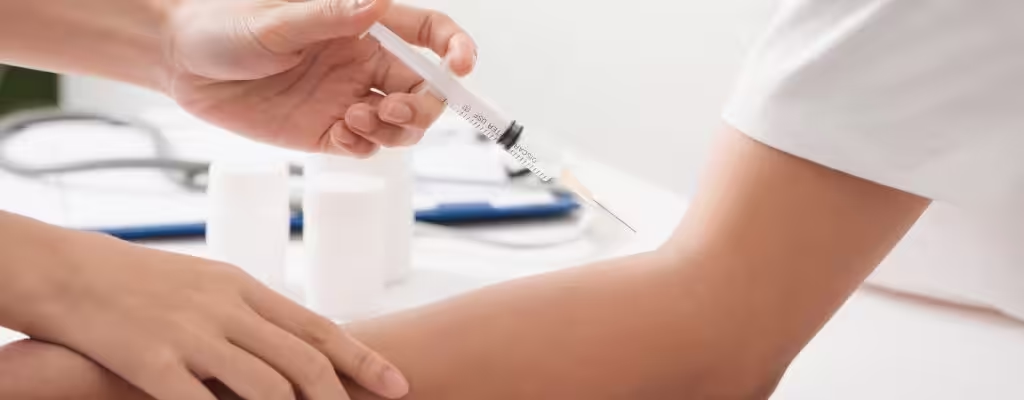
What Is a Phlebotomy Technician?
Phlebotomy technicians specialize in laboratory procedures. These medical professionals are tasked with collecting blood specimens, prepping equipment, shipping samples, and comforting patients. As a phlebotomist, you will be at the forefront of patient care, working intimately with patients to provide doctors with diagnostic information needed to deliver quality patient care. If you want a flexible career with growth opportunities, enroll in our Phlebotomy Technician Training program. This training includes 48 hours of in-class instruction with hands-on lab practice and 40 hours of clinical externship required for CPT-I licensing.
Doctors Juan and Alejandro Montes founded Montes HealthCare College to enrich the lives of aspiring medical professionals. The education you receive at MHCC will be derived from their first-hand experience working with patients and coordinating with phlebotomy technicians. At the end of your course, you will be prepared to venture forth into a rewarding career that not only supports you but supports your community as well. We encourage you to schedule a tour today and discover all the benefits of enrolling in our MHCC Phlebotomy Technician Training Program.
Duties and Responsibilities
- Administrative Duties:
- Submitting appropriate data to insurance carriers to ensure reimbursement.
- Preparing specimens for pickup by lab couriers.
- Work with many patients of varying health.
- Maintaining a curious attitude when dealing with patients.
- Organizing phlebotomy carts and stations.
- Laboratory Duties:
- Collecting blood samples from patients.
- Labeling and organizing vials with names and dates.
- Practicing patient-specific blood draw techniques.
- Centrifuging blood samples (dependent on state law).
- Practicing infection control standards.
Phlebotomy Technician Program Overview
At Montes HealthCare College, our phlebotomy technician training course focuses on teaching you the proper techniques of the trade. Through a mix of classroom instruction and laboratory exercises, you will learn the skills needed to prepare you for a long-term career in a hospital, a medical office, or a lab draw site. Below is an overview of your course time and what you can expect to gain from enrollment in the MHCC Phlebotomy Technician Program.
Program Objectives
The main objective of this program is to prepare you with both the knowledge needed to pass the California Department of Public Health certification exam and the skills needed to subsequently succeed in the medical field. After completing the program and receiving your license, you will be prepared for an entry-level position as a Certified Phlebotomy Technician 1.
Our Phlebotomy Technician Program requires a total of 88 hours to complete. The program is divided into three modules. They consist of:
- Basic Phlebotomy Module: During this course the administrative and professional competencies of phlebotomy are explored. Emphasis is placed on basic infection control, universal precautions and safety; basic anatomy and physiology of body systems with emphasis on the circulatory system and medical terminology; proper identification of patient and specimens and the importance of accuracy in overall patient care; proper selection and preparation of skin puncture site, including selection of antiseptic; blood collection equipment, types of tubes and additives, proper order of draw when additives are required, and special precautions; post-puncture care; and appropriate disposal of sharps, needles and waste.
- Advanced Phlebotomy Module: During this course the administrative and professional competencies of phlebotomy are explored. Emphasis is placed on advanced infectious disease control and biohazards; anti-coagulation theory; knowledge of pre-analytical sources of error in specimen collection, transport, processing, and storage; anatomical site selection and patient preparation; risk factors and appropriate responses to complications which may arise from phlebotomy; recognition of, and corrective actions to take, with problems in test requisitions, specimen transport and processing; applications of basic concepts of communication, interpersonal relations, stress management, professional behavior, ethics and legal implications of phlebotomy; quality assurance in phlebotomy necessary to provide accurate and reliable laboratory test results; and legal issues related to blood collection.
- Phlebotomy Externship: Externship is an integral part of the Phlebotomy Technician Program and is the final module after successful completion of classroom training. It is designed to give the students the opportunity to practice the administrative and the clinical skills gained during the medical assistant program. This module provides the student with a realistic workplace environment in which the extern can practice and refine procedural, technological, and interpersonal skills. The externship is done in an approved facility providing the student the opportunity to apply skills and knowledge learned during the training program. Extern students work under close supervision of facility personnel and are evaluated on the following criteria: Attendance, participation, professionalism, skill performance and subject knowledge. Absences during this training period must be made up. Satisfactory completion of the externship training, including performing 50 successful venipunctures and 10 successful skin punctures, is required for program completion.
After successfully completing your phlebotomy training, you will receive a Certificate of Completion. This certificate will allow you to take the state license exam administered by the National HealthCareer Association (NHA) and become approved by the California Department of Public Health.
Program Outline
| Module Number | Module Title | Clock Hours | Semester Credits |
|---|---|---|---|
| PBT 110 | Basic Phlebotomy Module | 24 | 1.0 |
| PBT 120 | Advanced Phlebotomy Module | 24 | 1.0 |
| PBT 130 | Phlebotomy Externship | 40 | 2.0 |
| Totals | 88 | 4.0 |
Class Schedule & Training Format
Our phlebotomy training in Gardena combines classroom instruction with hands-on laboratory practice and a supervised clinical externship. The structure is designed to support both full-time students and working adults.
Training Format Includes:
- Classroom instruction covering foundational theory, safety procedures, anatomy, and professional standards
- On campus lab practice where students perform blood draw techniques and master proper equipment handling
- 40-hour clinical externship in an approved healthcare facility
Schedule Overview:
- Classes follow a consistent weekly structure
- Courses are offered during evening and weekend hours
- Students should plan for 88 total clock hours, divided across three program modules
- Externship hours are assigned by the partner clinical site and must be completed as scheduled
For the current class calendar, upcoming start dates, and available time options, contact our admissions team.
Where Our Students Come From
Montes HealthCare College is located in Southern California and offers phlebotomy training in Gardena for students across the South Bay region. Many of our phlebotomy students come from nearby communities, including Torrance, Carson, Hawthorne, Lawndale, Inglewood, and Redondo Beach.
We also welcome students who commute from surrounding areas within Los Angeles County, such as Lakewood, Bellflower, and North Long Beach, which are all within a reasonable driving distance to our Gardena campus.
Our Gardena location at 555 W Redondo Beach Blvd, Suite 108, Gardena, CA 90248 is easy to reach from throughout the South Bay. The campus is conveniently accessible via the 110 and 405 freeways, making it simple for working students and commuters to attend classes.
Tuition & Fees Overview
Montes HealthCare College offers several tuition payment options to help students begin their Phlebotomy Technician Training without financial barriers. All financing options are designed to support students from diverse financial backgrounds.
Available payment options include:
- Upfront Payment suitable for all programs, including Phlebotomy Technician Training
- Interest-free monthly payment plans managed by our partner, Lumion, require a $250 registration fee at enrollment, with the remaining balance divided into equal monthly installments
For complete information about tuition, payment plans, and registration fees, visit our Fees and Financing page or contact our admissions team.
Phlebotomy Technician Career Outcomes
After completing your Phlebotomy Technician Training, passing the NHA certification exam, and receiving approval by the California Department of Public Health (CDPH), you can begin working as a Limited Phlebotomy Technician or a Certified Phlebotomy Technician I (CPT-I).
Certified phlebotomists are needed in many healthcare settings, including:
- Hospitals and medical centers
- Diagnostic laboratories
- Physician offices and outpatient clinics
- Blood donation centers
- Mobile or community based health programs
Employment opportunities for phlebotomy technicians are expected to grow steadily in the coming years due to the increasing number of elderly patients, advances in laboratory technology, and the ongoing need for accurate diagnostic testing.
This program prepares you with the skills, clinical experience, and professional training needed to begin an entry-level career that supports both your future and the health of your community.
Phlebotomy Training FAQ
How do I become a phlebotomist in California?
Students must complete an approved Phlebotomy Technician Training program, perform the required venipunctures and skin punctures during externship, pass a national certification exam, and gain approval from the California Department of Public Health (CDPH) for CPT-I licensure.
How much is phlebotomy school in California?
Tuition varies by school, training length, and payment structure. Montes HealthCare College offers an upfront payment option and interest-free monthly plans to make training accessible. Contact admissions for current program costs.
How long does it take to become a phlebotomist?
Training time depends on the program, but most students complete their education and externship within a few months. At MHCC, students complete 48 total hours of approved instruction, followed by 40 hours of clinical practicum.
How much do phlebotomists make?
Earnings depend on experience, location, and employer type. Many graduates begin in entry level roles in hospitals, labs, or clinics and gain higher earning potential as they build experience. For local insights, speak with our admissions team.
Enroll At Montes HealthCare College Today
If you’re ready to take the first step toward jumpstarting your career, get in touch today! To get started, fill out the contact form below and schedule a tour of our campus. If you have any questions or would like more information, get in touch by calling (424) 373-8211 or emailing us at info@monteshcc.com. We look forward to joining you on your journey to success!