 (424) 373-8211
What Does a Clinical Medical Assistant Do?
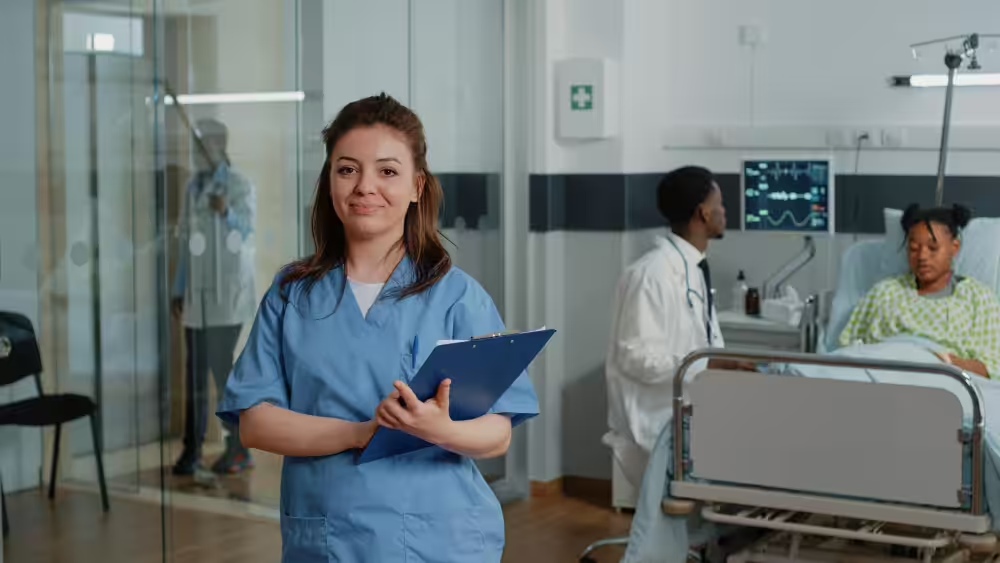
A Clinical Medical Assistant works directly with patients and healthcare providers in medical settings. Their role focuses on hands-on clinical care.
Responsibilities may include:
- Taking and documenting vital signs, including blood pressure, temperature, oxygen levels, height, and weight
- Drawing blood and collecting laboratory specimens
- Preparing and administering injections within the medical assistant scope of practice
- Performing EKG procedures and basic tracing
- Assisting with patient intake, medical histories, and basic assessments
- Supporting providers during exams and minor in-office procedures
- Following infection control protocols and sterile technique standards
- Performing CLIA-waived testing in outpatient healthcare settings
How Is This Different from the Medical Assistant Program?
The Clinical Medical Assistant Program is designed for students who want to work directly with patients and providers without learning front office or administrative responsibilities. The Medical Assistant Program includes both clinical and administrative training.
- Clinical Medical Assistant Program:
- Focuses only on clinical theory and patient care skills
- Shorter program length (440 hours total)
- Includes training in phlebotomy, injections, EKG, vital signs, and assisting during procedures
- Best for students who prefer hands-on healthcare environments
- Medical Assistant Program
- Includes both clinical and administrative training
- Longer program length (720 hours total)
- Includes clinical skills along with administrative workflows
- Best for students who want broader medical office training
Why Become a Clinical Medical Assistant in California?
California continues to see great demand for healthcare support professionals, especially in outpatient and ambulatory care settings.
Demand continues to grow because of:
- Expanding outpatient healthcare services
- Greater focus on preventative care
- An aging population that requires ongoing medical support
- Increased need for hands-on clinical staff in medical offices and clinics
According to the U.S. Bureau of Labor Statistics, medical assistant employment is projected to grow by 12%, which is much faster than the national average for all occupations.
California also remains one of the higher-paying states for clinical medical assistants, according to Indeed, where the average hourly wage is $25.76, which is 23% above the national average.
In South Los Angeles communities like Gardena, Inglewood, Hawthorne, and surrounding areas, Clinical Medical Assistants may find opportunities in:
- Primary care offices
- Urgent care centers
- Outpatient specialty clinics
- Community health clinics
- Hospital-affiliated outpatient departments
Clinical Medical Assistant Program at Montes HCC
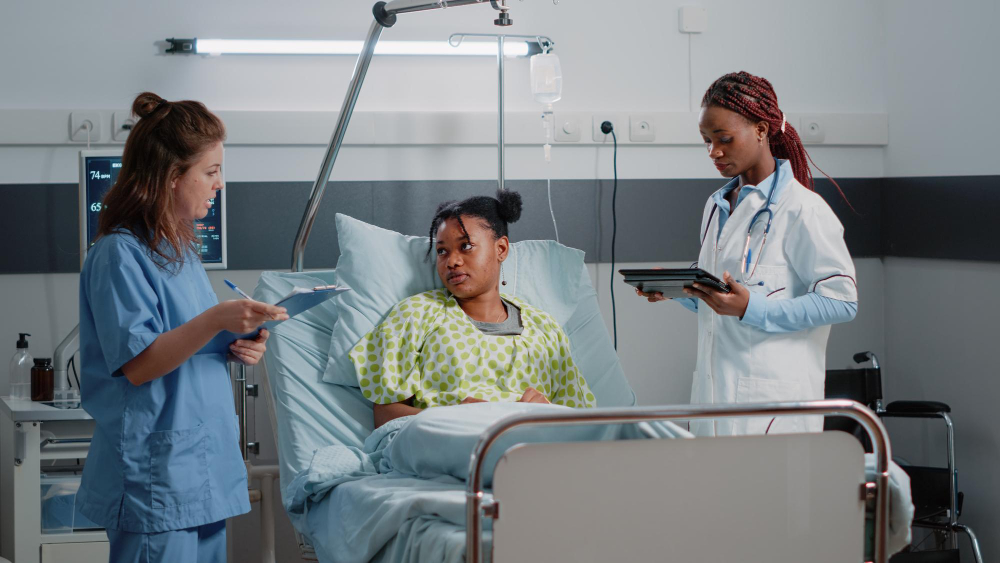
Montes HealthCare College offers a hybrid Clinical Medical Assistant Program. Students complete coursework four days per week online and attend one day per week in person.
The program includes supervised laboratory work, competency-based assessments, and eligibility to sit for the CCMA exam.
Program Structure Overview
The in-person format provides a structured, classroom-based learning environment with all instruction delivered on campus.
Program structure:
- Hybrid format with live online classes Monday through Thursday
- In-person clinical lab every Friday at the Gardena campus
- Weekly schedule: Monday – Friday, 8:30 AM to 12:30 PM
- Program length: Approximately 5 months
Online instruction typically covers:
- Anatomy and physiology foundations
- Medical terminology
- Professional communication and healthcare documentation
- Legal and ethical considerations, including HIPAA and confidentiality
On-campus sessions focus on:
- Clinical skill development (vital signs, phlebotomy, injections)
- Specimen handling and laboratory procedures
- Patient preparation and exam support
- Simulation-based practice with instructor supervision
Benefits of the hybrid format include:
- Ability to complete lecture-based coursework online while still receiving in-person clinical training
- Same clinical preparation and externship standards as the campus-based program
This format may be well-suited for:
- Students looking for a more flexible class schedule
- Students comfortable balancing online coursework with required on-campus lab participation
The hybrid program includes 80-hour externship requirement and CCMA exam eligibility.
What You’ll Learn (Curriculum & Skills)

The Clinical Medical Assistant Program at Montes HealthCare College is designed for students who want to develop practical patient care skills, complete training faster, and prepare for entry-level clinical healthcare roles in a shorter amount of time.
Clinical Skills
Students learn core clinical procedures used in medical offices, urgent care centers, and outpatient clinics.
Training includes:
- Vital signs measurement and documentation
- Phlebotomy and specimen collection
- Injection preparation and administration within scope of practice
- EKG procedures and basic tracing
- Patient intake and preparation
- Assisting providers during exams and minor procedures
Specimen Handling and CLIA-Waived Testing
Students receive training in proper specimen handling, infection control, and basic laboratory support procedures used in outpatient healthcare environments.
Training includes:
- Specimen labeling and transport
- Blood and urine collection procedures
- CLIA-waived laboratory testing
- Safety protocols and contamination prevention
- Sterile technique and infection control standards
Patient Communication and Education
Students develop professional communication skills that support patient comfort, safety, and workflow efficiency.
Training includes:
- Patient interaction and intake procedures
- Professional communication in clinical environments
- Patient preparation instructions
- Documentation and healthcare communication standards
Pharmacology Foundations
Students are introduced to basic pharmacology concepts related to medication administration responsibilities within the medical assistant scope of practice.
Training includes:
- Medication terminology
- Dosage awareness
- Injection safety protocols
- Medication preparation procedures
- Clinical safety considerations
Anatomy, Physiology, and Medical Terminology
The program includes foundational healthcare knowledge that supports clinical decision-making and patient care tasks.
Training includes:
- Basic anatomy and physiology
- Medical terminology
- Body systems and common clinical terminology
- Healthcare abbreviations and charting language
HIPAA, Scope of Practice, and Legal Considerations
Students learn the legal and ethical standards expected in healthcare settings.
Training includes:
- HIPAA and patient confidentiality
- Professional conduct in clinical environments
- Medical assistant scope of practice
- Healthcare safety and compliance standards
- Infection prevention protocols
Externship Readiness
The program prepares students for supervised clinical experience in a real healthcare environment.
During externship training, students may:
- Assist with patient intake and preparation
- Perform supervised clinical procedures
- Support providers during patient care activities
- Practice workflow and communication skills in outpatient settings
Externship Readiness
The program concludes with an 80-hour clinical externship, where students apply the skills learned in class and lab:
- Hands-on experience in real outpatient settings
- Exposure to patient interactions, workflow patterns, and clinical routines
- Increased confidence performing clinical tasks
- The externship reinforces practical competency and prepares students for entry-level clinical medical assistant roles.
Certification Eligibility (CCMA)
Graduates of the Clinical Medical Assistant Program at Montes HealthCare College are eligible to pursue a nationally recognized credential upon completion.
- Students are eligible to sit for the Certified Clinical Medical Assistant (CCMA) exam.
- California does not currently require Clinical Medical Assistants to hold a certification in order to work in the field. However, many healthcare employers prefer candidates who have earned a nationally recognized credential.
- Certification may help demonstrate clinical knowledge, procedural competency, and readiness for patient care responsibilities in healthcare settings.
Admissions Requirements
Applicants to the Clinical Medical Assistant Program must meet basic requirements to participate in classroom instruction, laboratory training, and clinical learning activities.
Applicants must provide:
- A valid government-issued photo ID
- Proof of English proficiency sufficient for coursework participation and patient communication
Program Costs & What’s Included
The Clinical Medical Assistant Program at Montes HealthCare College costs $4,750. Tuition covers classroom instruction, hands-on laboratory training, and supervised externship preparation.
Tuition includes:
- Required textbooks and learning materials
- Classroom and laboratory supplies
- One set of scrubs/uniforms
- Stethoscope & sphygmomanometer
- Study resources and exam preparation materials
- Academic support and tutoring throughout the program
- One (1) attempt at the CCMA NHA exam.
Salary & Job Outlook in California
Clinical Medical Assistants in California continue to benefit from strong hiring demand. California remains one of the largest healthcare employment markets in the country, with competitive wages and continued industry growth.
State and National Salary Data
- The estimated average yearly salary for clinical medical assistants in California is $58,788.
- Medical assistants in California often earn above the national average due to great healthcare demand and the state’s larger outpatient care network.
- Salary levels may vary based on experience, certification status, employer type, and geographic region.
Job Outlook
- California projects a 17.4% increase in medical assistant employment over the coming years.
- California consistently ranks among the top states for medical assistant employment opportunities.
Career Paths After Graduation
The Clinical Medical Assistant Program at Montes HealthCare College prepares students for patient-facing roles focused on clinical care and back-office healthcare responsibilities.
Potential career paths may include:
- Clinical Medical Assistant
- Back-Office Medical Assistant
- EKG-focused Medical Assistant
- Specimen Collection or Phlebotomy-Focused Assistant
- Pediatrics Clinical Assistant
- Women’s Health Clinical Assistant
- Specialty Clinic Clinical Assistant
Enroll At Montes HealthCare College Today
If you’re ready to take the first step toward becoming a clinical medical assistant, we encourage you to get in touch today! Fill out the contact form below to schedule a tour and learn more about what we can do for you. If you have any questions or would like more information, get in touch by calling (424) 373-8211 or emailing us at info@monteshcc.com.
FAQ
What is the difference between a Clinical Medical Assistant and a Medical Assistant?
A Clinical Medical Assistant focuses mainly on hands-on patient care and back-office clinical responsibilities such as phlebotomy, injections, EKGs, and assisting providers during procedures. A Medical Assistant program includes both clinical and administrative training, including scheduling, insurance, billing, and front office responsibilities. Students interested in broader healthcare office training can explore the Medical Assistant Program at Montes HealthCare College.
How long is a Certified Clinical Medical Assistant program?
The Clinical Medical Assistant Program at Montes HealthCare College is expected to take approximately 5 months. Program length can vary depending on the school, schedule format, and externship requirements.
Do I need to be certified to work as a clinical medical assistant in California?
California does not require Clinical Medical Assistants to hold a certification to work in the field. However, many employers prefer candidates with a nationally recognized credential because it demonstrates clinical knowledge and job readiness.
Where do clinical medical assistants work?
Clinical Medical Assistants commonly work in outpatient healthcare settings such as primary care offices, urgent care centers, specialty clinics, community health clinics, and hospital-affiliated outpatient practices. In the South Los Angeles area, healthcare employers continue to hire clinical support staff to assist with growing patient demand.
Is the Clinical Medical Assistant Program available online?
Yes. The Clinical Medical Assistant Program is offered in a hybrid format, allowing students to complete coursework online four days per week while attending one in-person training day each week.
How does the CCMA exam work?
The Certified Clinical Medical Assistant (CCMA) exam is administered by the National Healthcareer Association (NHA). The exam typically includes questions covering clinical procedures, patient care, infection control, anatomy, and medical terminology. Students usually schedule the exam near the end of the program after completing their training requirements.